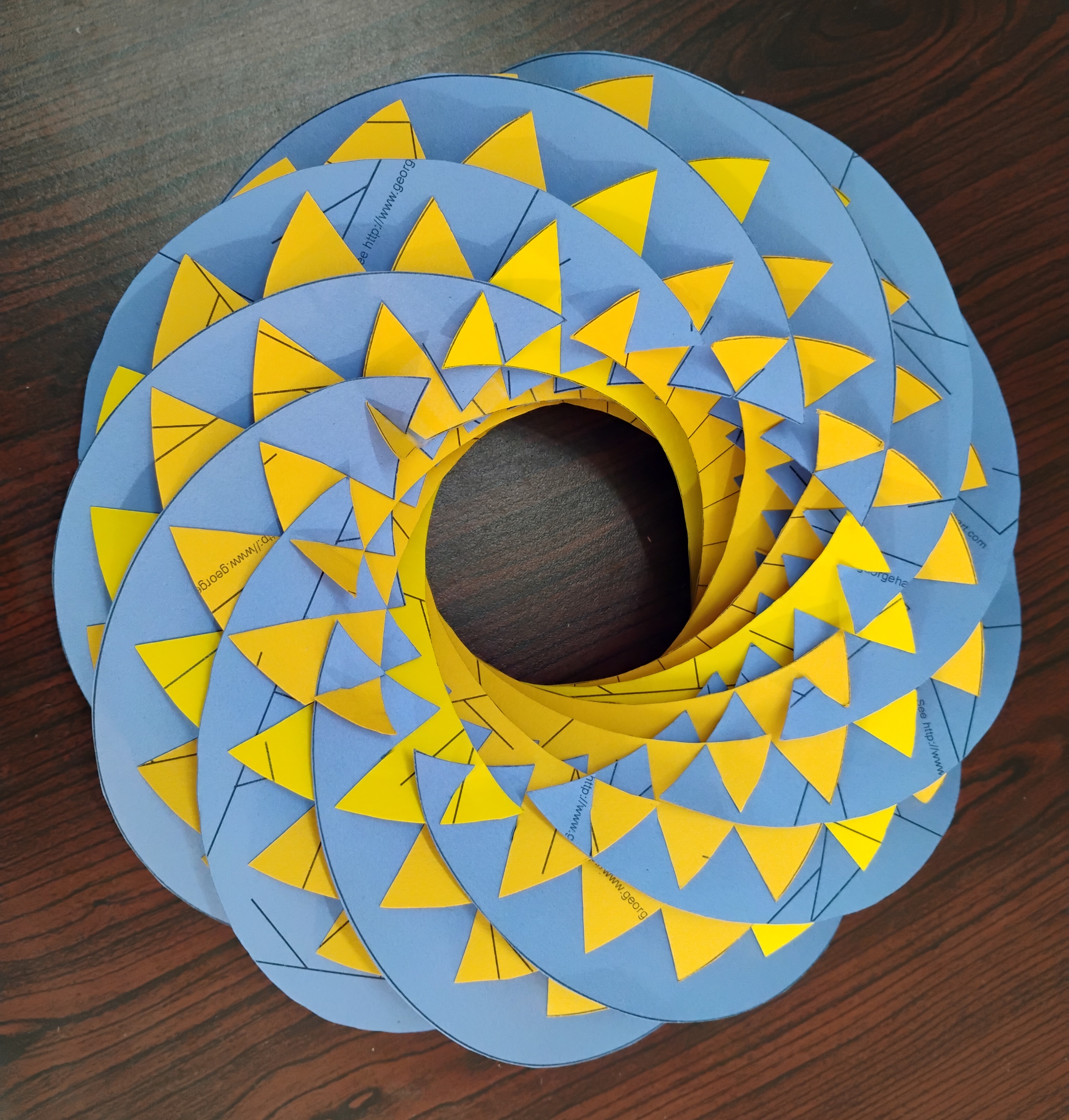
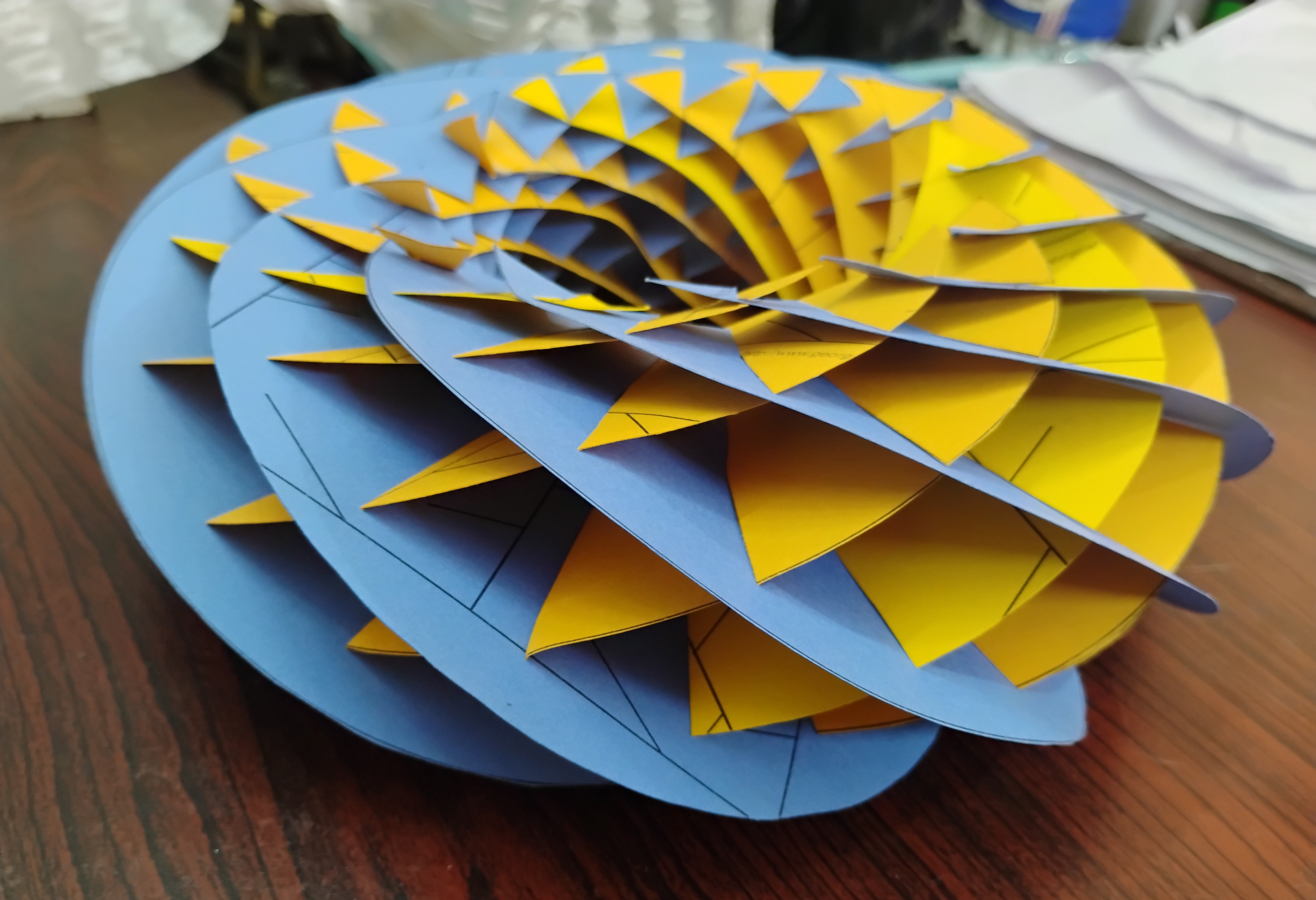
A few weeks ago, a friend showed me this sliceform torus and asked, “How many circles can you draw on the surface of a torus that pass through a fixed point on the torus?”
There are two very familiar ones. The first is the circle that lies in a plane parallel to the equatorial plane of the torus. The second lies in a plane perpendicular to the equatorial plane (the meridian circle in the plane that contains the point and the axis of the torus).
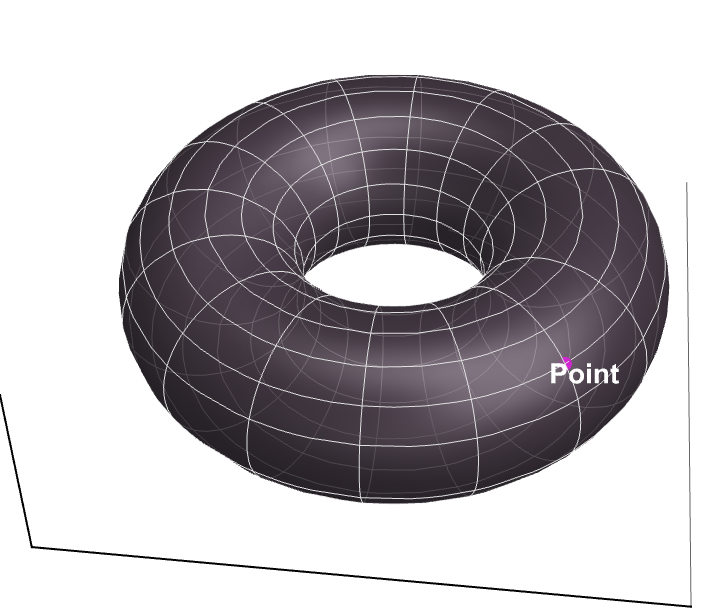
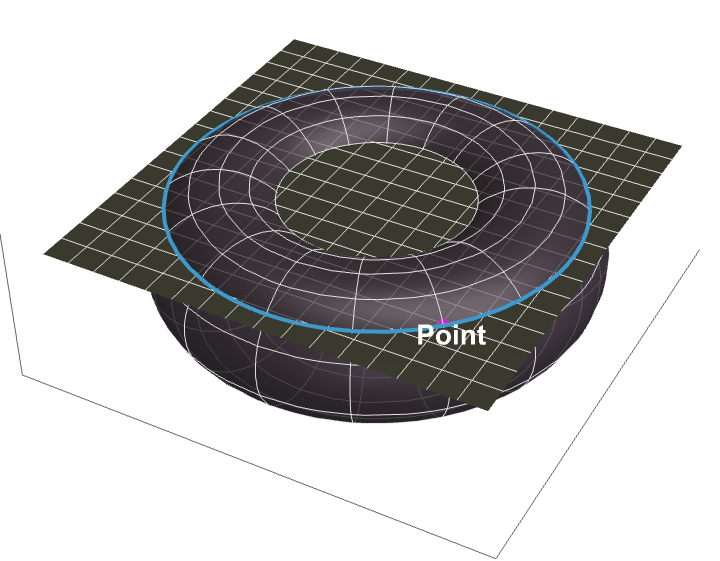
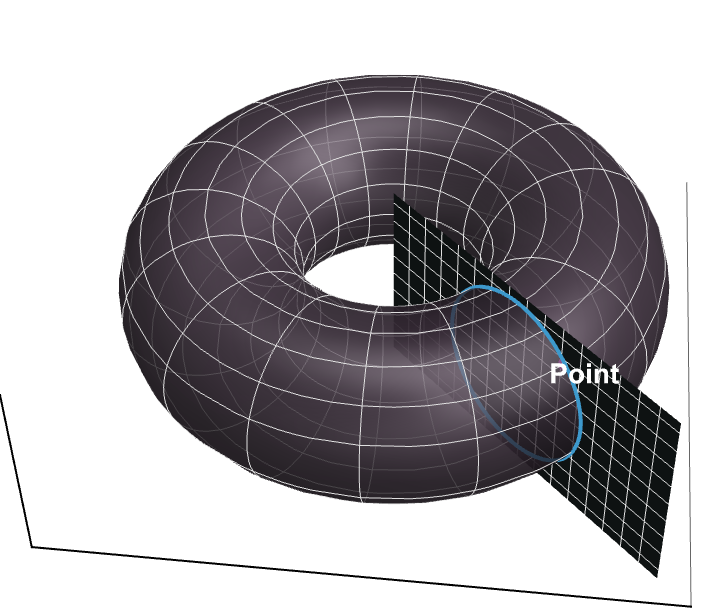
Are these the only two? If you go back and take another look at the sliceform paper model of the torus, you might notice that each of the interlocking pieces is a section of the torus by a plane, and each piece is shaped like a section of a circle. Sliceforms are geometric models constructed from interlocking sets of planar pieces. In the paper model you can trace and complete circles that are neither equatorial nor meridian.
If you enjoy imagining things, here is a thought exercise to construct these circles. (Let me know how far you get. I am also trying to test how good I am at describing geometry well enough for you to illustrate it in your imagination.)
You can think of a torus as a circle revolved around an axis that lies outside the circle, at some distance from it, and in the same plane as the circle. Now pick a point, any point on the surface of the torus. Imagine a plane passing through that point and the centre of the torus. To define a plane, you need at least three points, so with just these two points, the plane can still rotate about the line joining them. As the plane rotates, it slices through the torus. For two particular orientations, the intersection is a circle. This happens when the plane is also tangent to the surface of the torus. If your imagination fails you, try drawing a diagram as you go. That might help!
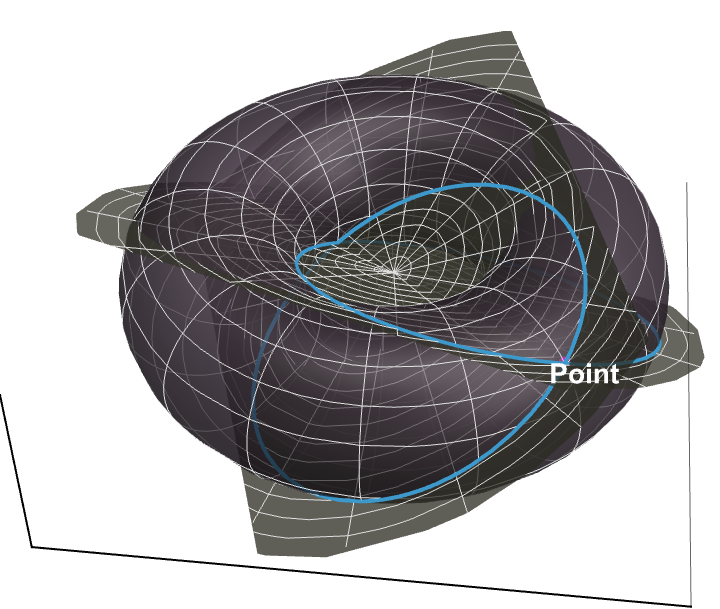
I haven’t yet found a reference that explains them in a way I find good enough to share. If you know of one that’s accessible to someone comfortable with basic coordinate geometry, please share it.
Are there only four circles through a point on a torus? Could there be more? What about other conic sections? Can you have ellipses on the surface of a torus? And if a surface has only four circles passing through each point, does that mean it must be a torus? Maybe try sectioning and slicing as you eat through a vada or donut next time. You might find answers to some of these questions, or end up with even more questions.
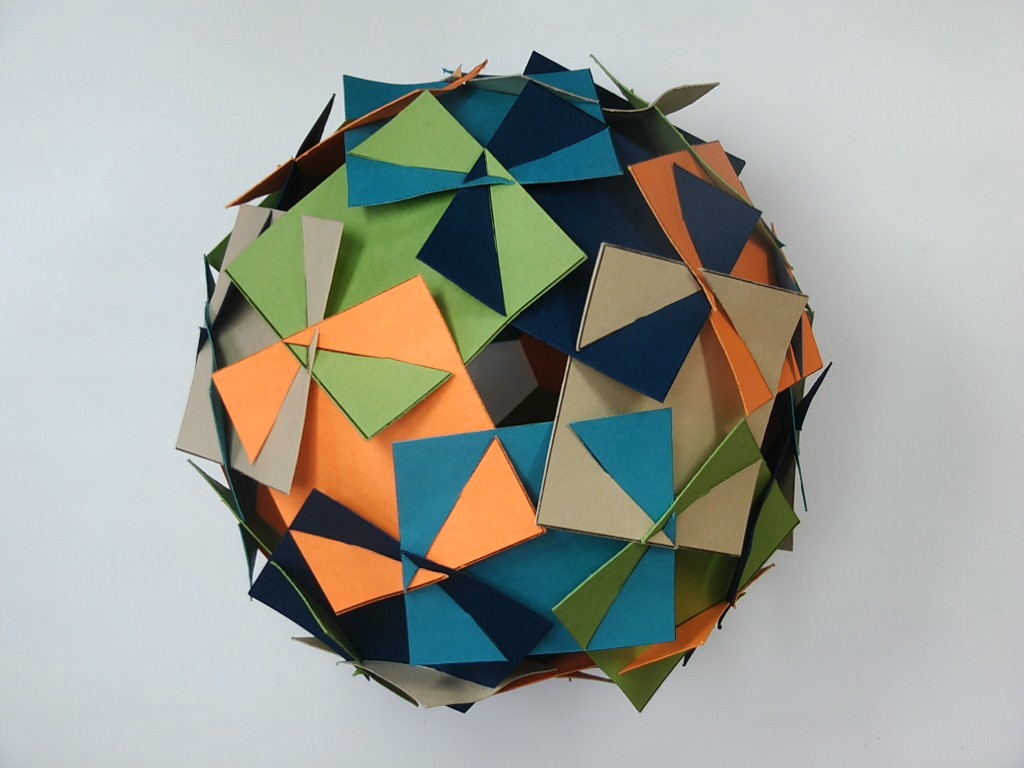
On a related note, last year another friend introduced me to Hart’s paper construction models of polyhedra made using regular polygons1. Here is the rhombicosahedron we made then.
References: